Sahil
An Alternate West Africa
The place the rest of the world calls the edge of nowhere, where the libraries held more manuscripts on mathematics and astronomy than most northern cities had books. Sun-darkened and unhurried, wrapped in flowing robes that shift between indigo and saffron depending on the light, moving with the patience of people who measure distance in days. The spice markets perfume the narrow alleys with cinnamon and cardamom, the silver and copper work is hammered by hand in workshops behind mosque walls, and the dhows in the harbor still carry lateen sails patched so many times the fabric is more repair than original. Gold was traded for salt here at equal weight, and if that sounds like madness, you do not yet understand what salt is worth when the nearest source is a month away.
The Valdaran merchant is confused by the market. He sees gold being traded for salt at weights that offend his sense of economic theory, and cowrie shells changing hands for goods the northern ledger cannot price. He does not understand the silent trade — the gold left on a cloth at the river’s edge, the salt placed beside it, the parties withdrawing without speaking, the negotiation conducted in pure trust until both sides are satisfied. To the Valdaran, value is a number in a ledger. To the Sahilian, it is a relationship between the sky and the soil. The gold is the sun’s sweat that the earth has agreed to hold for a time — the operating principle of a trade system that ran without interruption for two thousand years before the steamship arrived to explain it incorrectly.
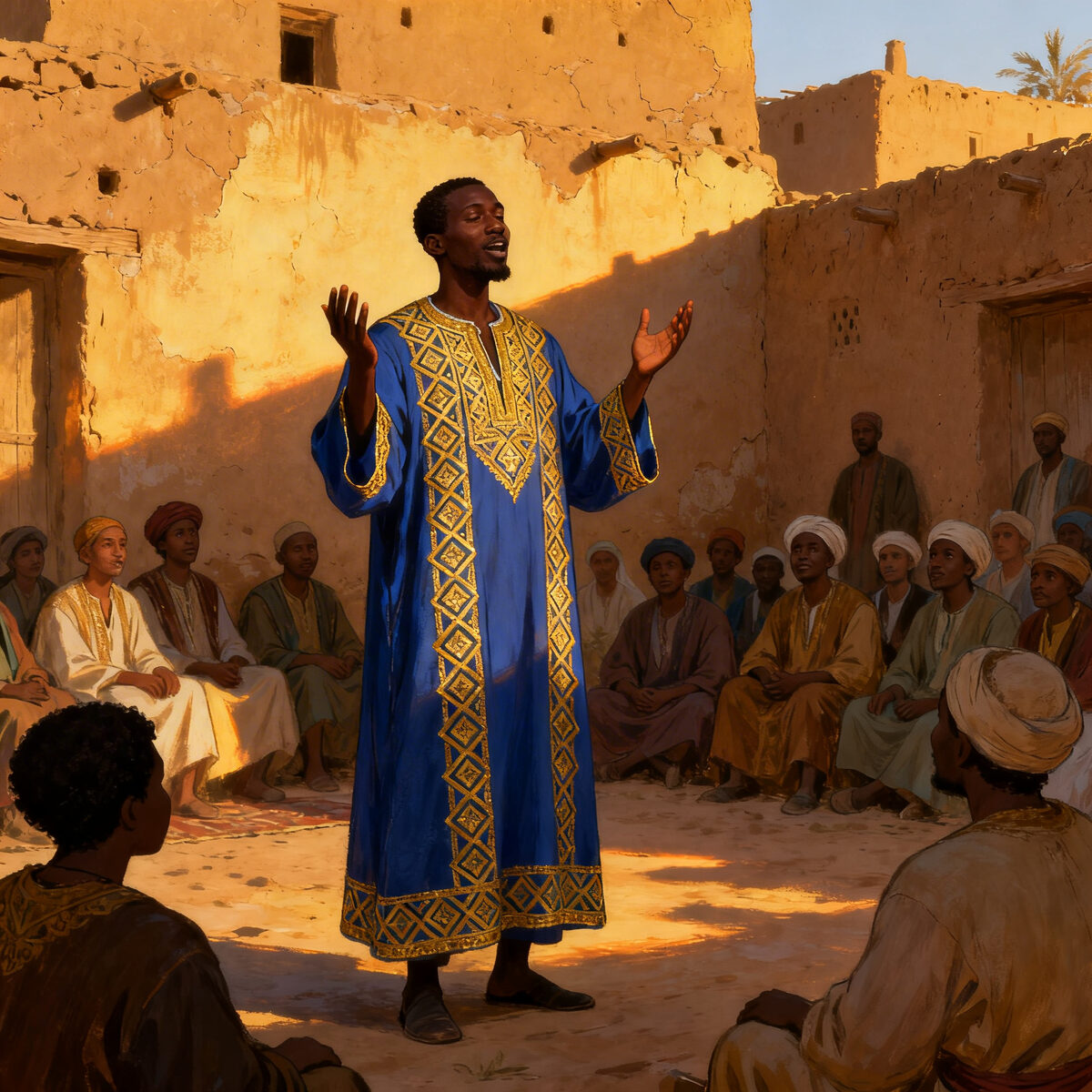
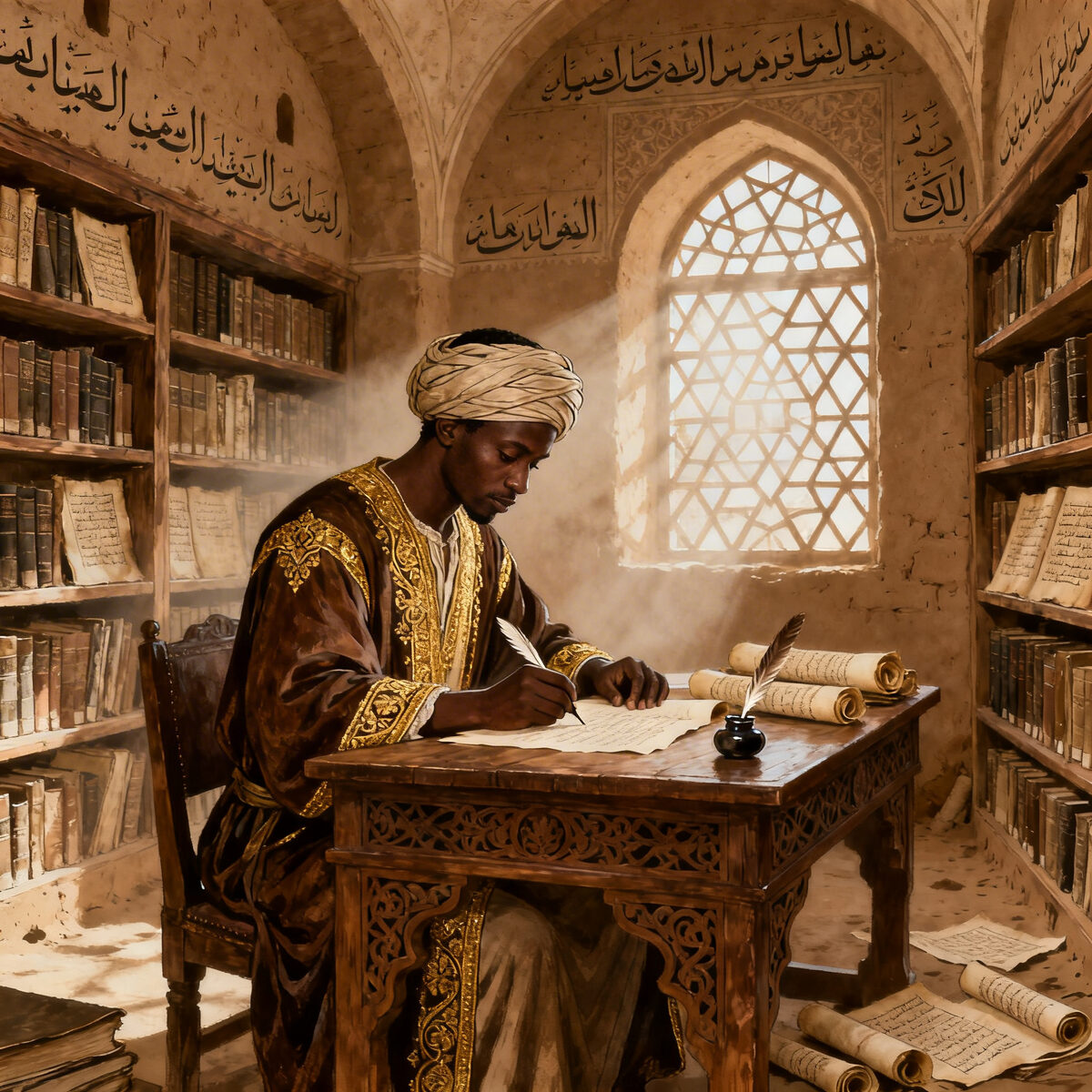
The archives here are alive, and the earth is responsive. The great libraries of the inland cities contain thousands of manuscripts on mathematics, astronomy, and law, but the record that actually governs daily life is carried by the griots — the masters of the breath who can recite your family’s lineage back to the first king without missing a beat. The Valdaran administrator wants a signed document. The Sahilian provides a witness who remembers the oath. One can be burned. The other lives as long as there is a throat to carry it, which in a culture that takes the responsibility of memory seriously is a very long time.
The Sudano-Sahelian mud-brick buildings, their walls studded with timber beams that jut from the surface like the ribs of something alive, require the whole community to replaster them every year. This is not a failure of the material but the design. The crépissage is a festival — the entire village ascending the walls with buckets of wet clay, the drums beating the rhythm of the work, the children passing the mud in a chain. If the people do not come back, the mosque melts. This is the point. A building made of the earth stays in conversation with the earth, and the annual replastering is the renewal of a relationship rather than the patching of a deficiency. The great mosques and universities of the inland cities have been standing for centuries not despite the mud but because of it.
The boli kept in the inner chambers of the village is an accumulation of nyama — the life force contributed by everyone who has ever maintained a relationship with it through sacrifice and prayer and correct conduct over generations. When the nyama in a boli runs low, the evidence is practical and agricultural: it is seen in the crops, the health of the community, the functioning of the covenants that hold the trade routes together. You approach nothing carelessly in Sahil, because everything that matters has been accumulating what it is for a very long time.
When the Faith arrived in Sahil, it found a civilization that already understood the oneness of things, so it moved into the universities and the mosques without requiring the destruction of the foundations. The prayers in the mud-brick mosques and the amulets sewn into the robes and the secret names whispered before a long journey are not in conflict. They address different aspects of the same reality at different levels of formality, the way a Sahilian might speak to a stranger with full courtly address and to a family member in the shorthand that assumes a shared history.
The Verdant Shield recognizes its own when they arrive — karam as the highest form of strength, generosity as the measure of honor, the understanding that prosperity is maintained through right relationship rather than individual accumulation. The Ka Agorate’s House of Wisdom already treats the spoken word as a physical force capable of altering the world, which is the correct assessment, and the griots have known this longer than the House has had walls.
Reference Images
These images represent the visual direction for this region and were generated with OpenArt.
Grimmloch is an alternate reality — not a retelling of history. I have spent decades studying the stories of our own world so that each region feels grounded in something real, even when the fiction diverges. The map is not the territory. If I have, at any point, failed to honor the spirit of these cultures, please email me directly. I welcome the opportunity to address it.