Arzawa
An Alternate Anatolia
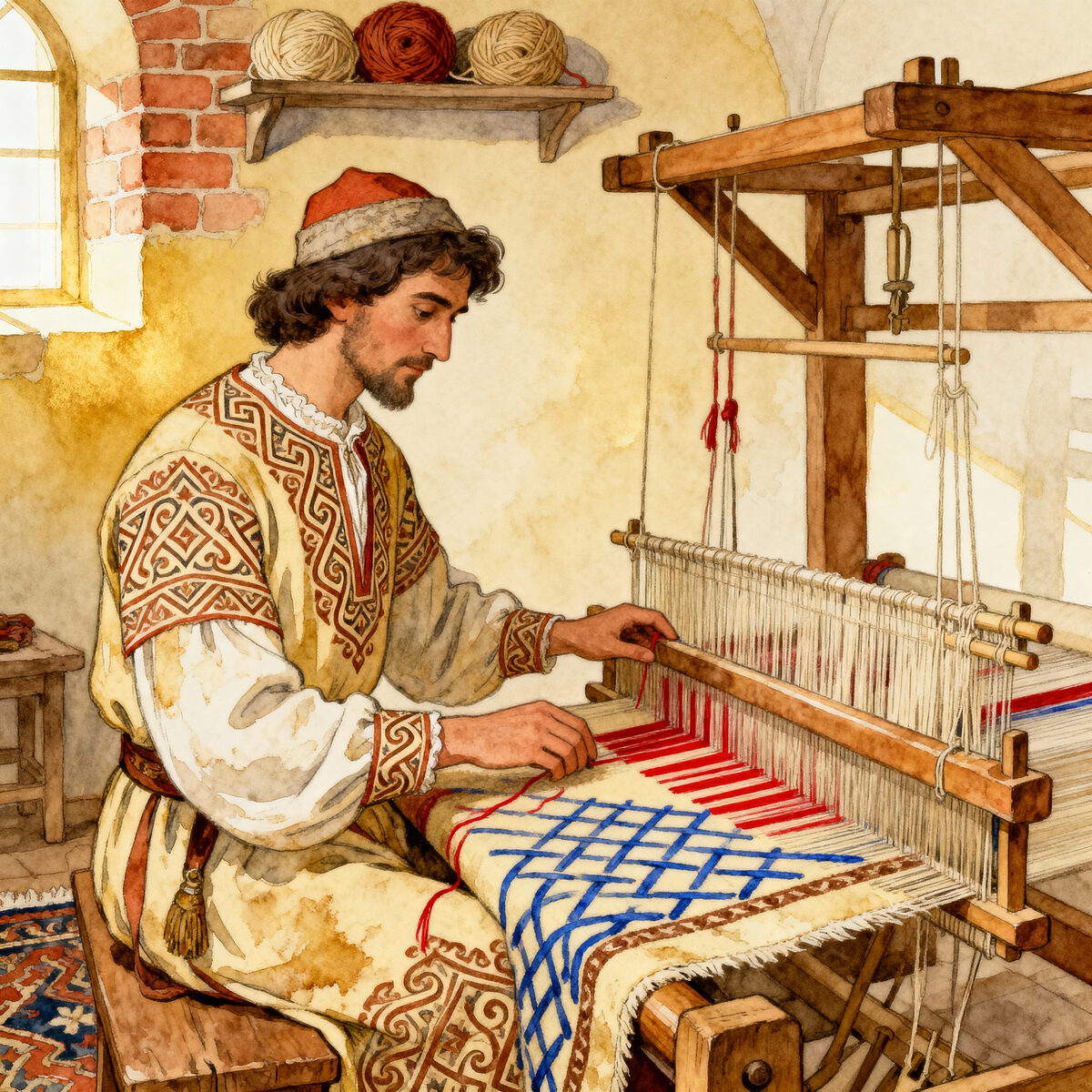
Arzawa is the highland peninsula east of the Aigaion, where the ochre hills run down to the Mesogeios coast and the volcanic plateau rises behind them. The Arzawans speak Romaic, the language Tsarigrad gave the kingdom from its seat on Arzawa’s western coast. Their Bronze Age kingdoms held the inland trade routes between the Mesogeios and the steppe. The Arzawan kilim weaver who has woven the family’s travels into the geometric ledger of her carpet for thirty years knows where the Tsarigrad pattern catalogue gets the older motifs wrong.
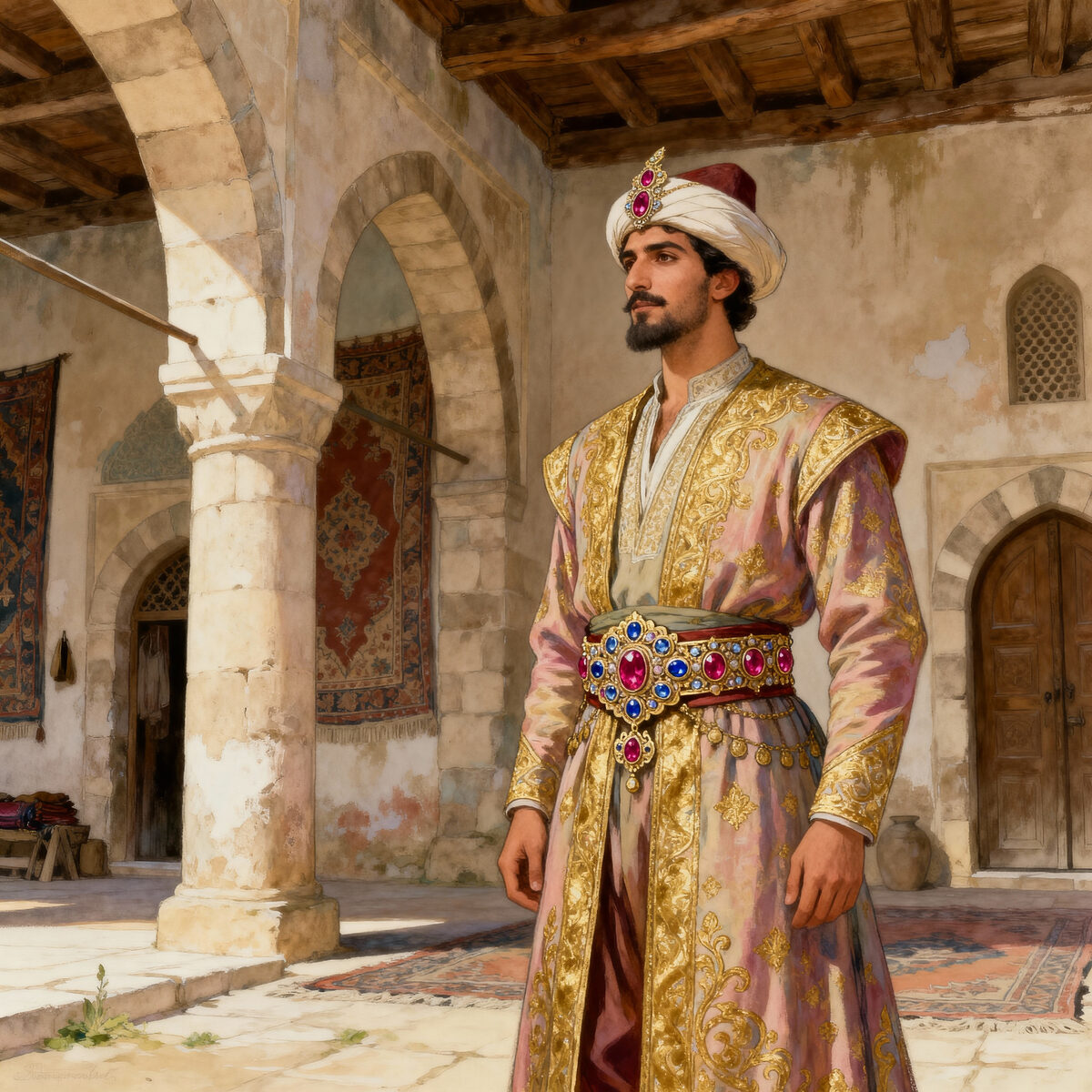
The villages cluster in the tufa highlands. Houses are stone-walled below with mud-brick upper stories, carved wooden lattice over the windows, and red-tiled roofs above. The travertine springs at the foot of the southern plateau cascade down terraces of white mineral, hot water steaming into the stone basins where the villagers come to bathe. The caravanserai on the road from Tsarigrad takes muleteers and pilgrims into its central courtyard at sundown and shuts the iron-bound gate behind them. The Kangal dog walks the ridges with the shepherd, broad-headed and pale-coated, the spiked iron collar at its throat heavy enough to break a wolf’s jaw. In each village square the plane tree shades a stone bench where the old men play backgammon, and the village fountain runs at the base of its trunk.
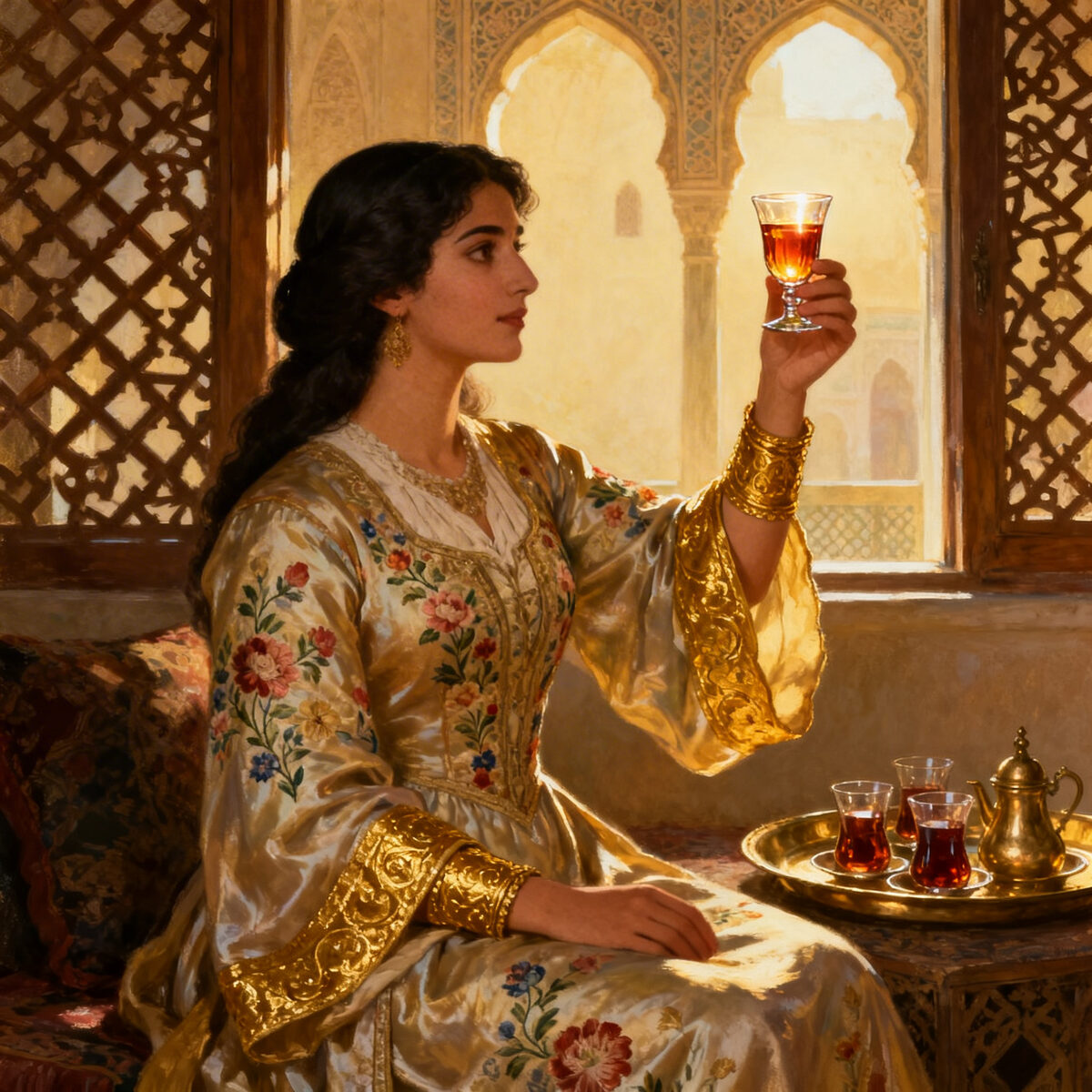
The tea comes in a tulip-shaped glass that holds heat between two fingers, the host pouring concentrate from the upper kettle and water from the lower. You do not refuse the first glass and you do not rush the second; the conversation has its own clock and it runs on the bottom of the glass, not the Valdaran timepiece bolted to the wall of the new tax office. If the inspector wants his papers stamped he will wait until the tea is finished, and if he has been in Arzawa longer than six months he already has his hand on his own glass. The copper-smith in the bazaar hammers out the double-boilers and spice-boxes, the patterns chased into the metal with the stamps his grandfather used. The apprentice has been hammering the same tray pattern for six years before his master will let him sign his own work.
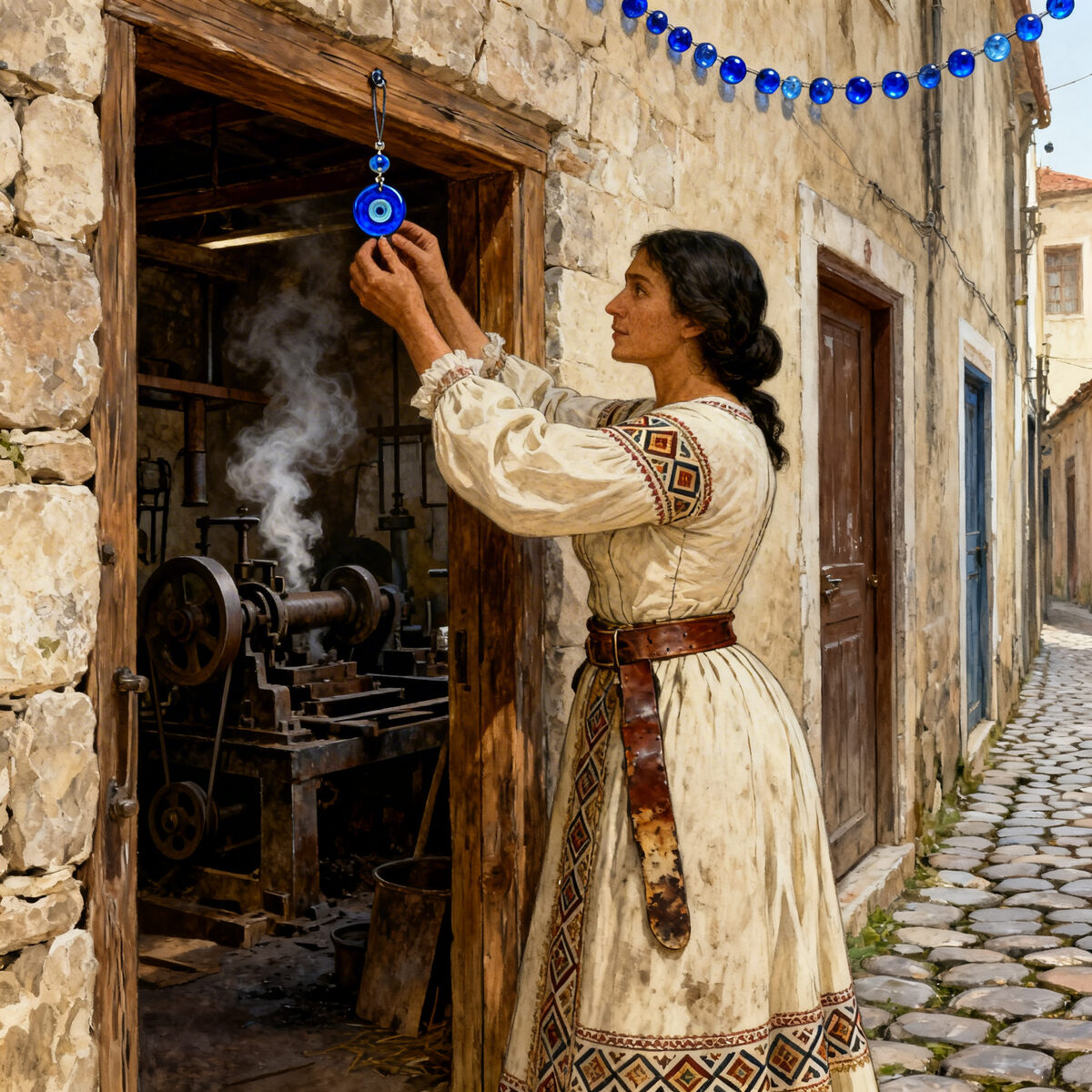
The blue glass beads hang above every door and over every cradle in Arzawa. The Nazar-maker who runs his stall at the edge of the bazaar turns the molten glass on the iron rod and presses in the cobalt and white spirals before the glass cools. When the new steam-loom in the next village stopped running the morning after a rival came and stood watching it for a quarter-hour, the Valdaran engineer wrote the report as tensile failure and vibration fatigue, and the weaver pointed at the blue glass shards on the floor and went to the Nazar-maker’s stall to buy three more. Before stepping into an empty room you say destur, because the room may not be empty and announcing yourself is courtesy.
The mosaics in the basilicas of Tsarigrad have faces underneath the saints painted over them, the earlier work showing through in the corners where the upper paint has flaked. The Faith gave the older presences new names, and the widow lighting a candle in the south aisle knows both names and uses whichever the occasion requires. The saz in the coffeehouse plays melodies the long-necked balama beside it knows by heart, and the boy at the saz player’s elbow picks up the songs in their proper order.
In Grimmloch the Dunraven Folk’s Borovichi mediate between the household spirits, the ancestors, and the older ones in the trees, and when an Arzawan widow steps into a Borovichi rite they find the volkhvi at the same work. The Aurelia Raed’s Hassel Hring meet at the great hall and renew the oaths sworn on the iron arm-ring, and an Arzawan copper-smith’s apprentice who has been hammering the same tray pattern for six years finds the Hring’s discipline already in his hands. The Ka Agorate’s Consortium runs the warehouse-quarters in the foreign ports where a master weaver’s mark on a kilim sets the price the merchant prince will pay for a hundred of them, and an Arzawan kilim weaver who has woven the family’s travels into the geometric ledger of her carpet for thirty years joins into the Consortium fondaco with her work already speaking the language.
Reference Images
These images represent the visual direction for this region and were generated with OpenArt.
Grimmloch is an alternate reality — not a retelling of history. I have spent decades studying the stories of our own world so that each region feels grounded in something real, even when the fiction diverges. The map is not the territory. If I have, at any point, failed to honor the spirit of these cultures, please email me directly. I welcome the opportunity to address it.