Aigaion
An Alternate Aegean Coast
The Aigaion sits on the eastern shore of the sea that gives it its name, between Achaea to the west and Arzawa to the east, where the limestone cliffs rise straight from the water and the harbors tuck into the bays between them. The Aigaionites speak Hellenic at home and Romaic with the administrators. Their coastal cities ran a confederation among themselves in the Iron Age, and the names of the assembly’s seats are still carved into the stones of the council halls. Valdara administers the Aigaion from Tsarigrad in Romaic. The Aigaionite fisherman who has read the coast in fog since he was a boy knows where the surveyors’ charts printed in Tsarigrad are wrong.
Pine trees grow sideways out of the cliff cracks where there is no soil. Above the harbors the rock-cut tombs of the old families face the open water. The villages are stone-built with wooden balconies and tile roofs, climbing the slopes in narrow lanes. The amphitheaters cut into the hillsides above the villages still hold the harvest dance and the funeral procession. Citrus groves run along the lower terraces, scenting the air with orange blossom in the spring. The Aigaionites are sea-weathered and dark-haired, dressed in linens that the salt has bleached to the color of the cliffs.
Grouper, sea bream, and the occasional swordfish come into the morning market from the boats. The citrus orchards send their oranges and lemons to the Tsarigrad market in winter, and the prices the growers get have been falling against cheaper imports from the southern coast. The honey from the wild thyme on the highland slopes still sells well to the spice merchants. The shipwright in the harbor can rebuild a caïque the way her grandfather did, but she has not had an apprentice in twelve years. The young go to Tsarigrad for wages, and the houses they leave behind stand empty most months of the year.
The cliff tombs are where the families go to leave offerings to specific ancestors. On the death-anniversary of the named ancestor, a small cup of wine and a sprig of myrtle go at the rock face below the carving. The Chimaera burns out of the hillside above Olympos. The Faith built its shrine around the flame, and the priest leaves the fire burning during services. The fisherman teaches his children which coves to swim in by daylight only, and which depths require a partner before diving.
In the off-season afternoon the grandmother walks her granddaughter up to the cliff tombs and teaches her the carved names. She speaks each name the way her own mother taught her, with the matrilineal pronunciation kept inside the family. The Tsarigrad archaeologists who sketch the carvings file the names under ancient mystery. The grandmother teaches the granddaughter, and the names stay spoken.
In Grimmloch the Aelfyn Sith’s Folkling treat the daily housework as the spiritual work, and an Aigaionite grandmother who has spent her life teaching her granddaughters the matrilineal names finds the Folkling already understand what she has been doing. The Ka Agorate’s Asāsīyyūn pursue truth through fire and trance and direct encounter with what dwells in the flame, and an Aigaionite who has spent the night-watch in the chamber where the Chimaera burns recognizes the same kind of work. The Dunraven Folk’s Drekarmen pass down the navigation knowledge captain-to-captain, and an Aigaionite fisherman who has taught his children the family rules for the local water finds himself handed the chart on his first Drekarmen deck.
Reference Images
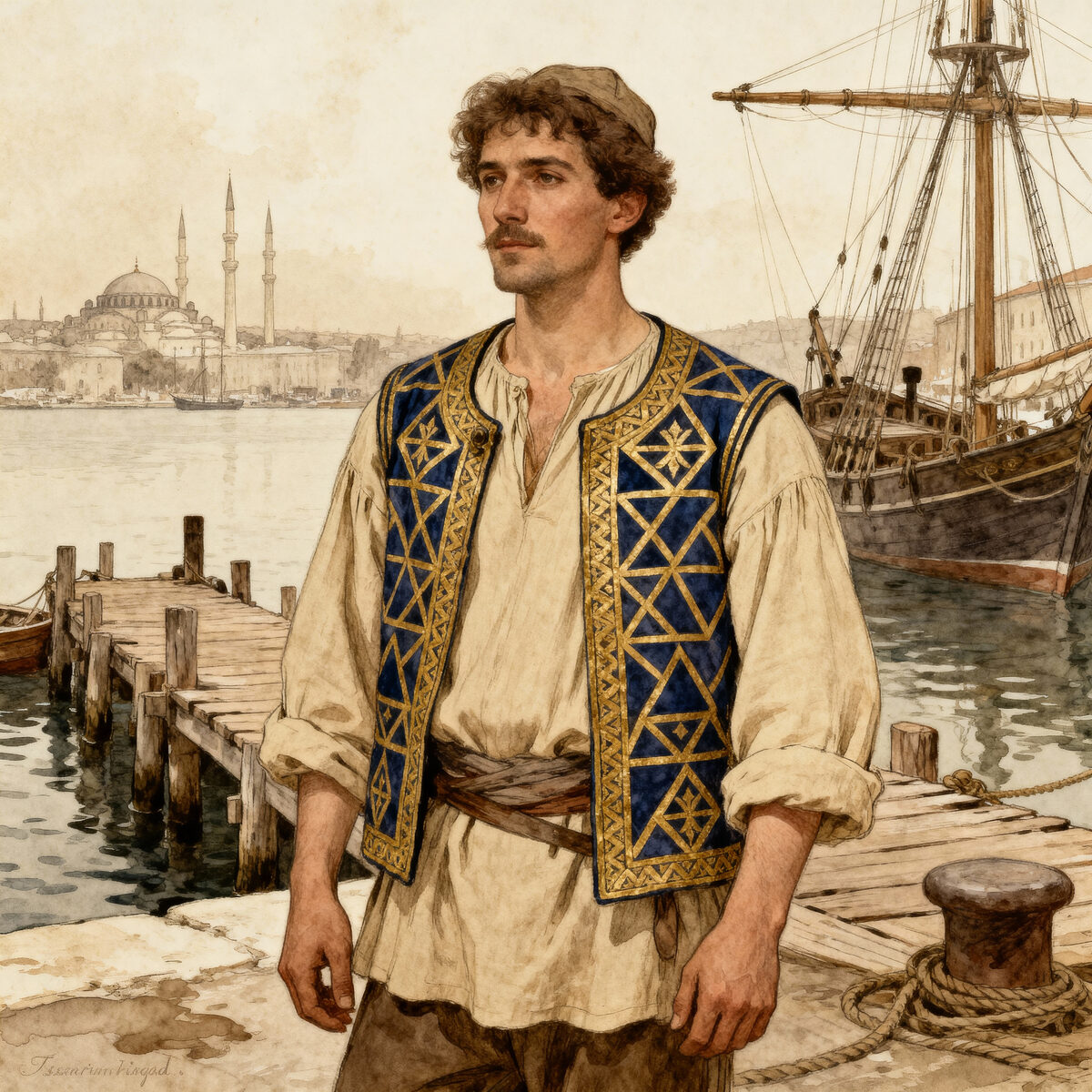
These images represent the visual direction for this region and were generated with OpenArt.
Grimmloch is an alternate reality — not a retelling of history. I have spent decades studying the stories of our own world so that each region feels grounded in something real, even when the fiction diverges. The map is not the territory. If I have, at any point, failed to honor the spirit of these cultures, please email me directly. I welcome the opportunity to address it.