Achaea
An Alternate Greece
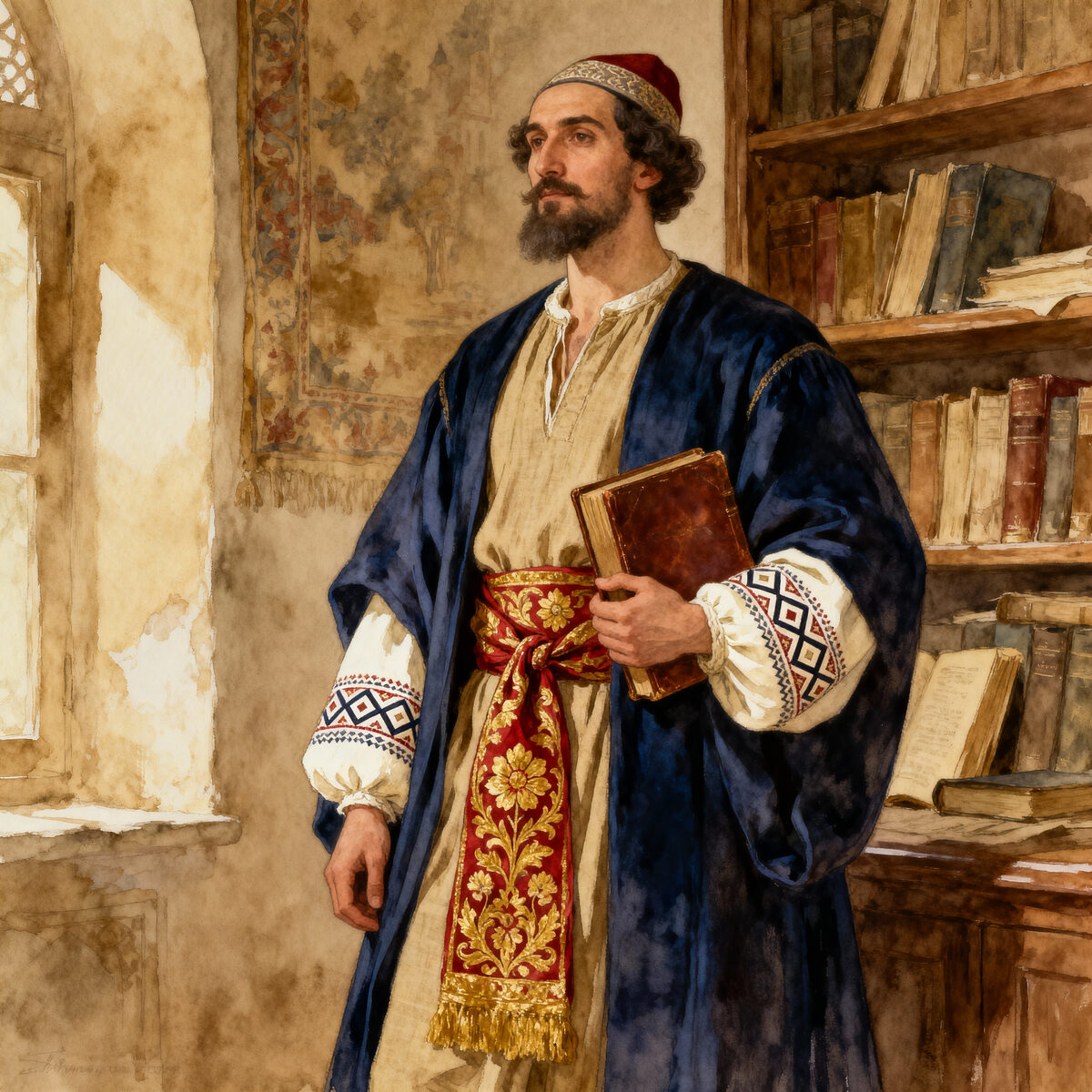
Achaea is the peninsula and islands at the western edge of the Aigaion, where olive terraces climb the limestone hills and the marble of the acropolises still stands on the headlands above the bays. The Achaeans speak Hellenic. Their Bronze Age ports carried Alashiyan copper and Aegyptian linen across the Mesogeios. The Achaean philosophers who came after worked out the geometry that Valdara’s engineers in Tsarigrad use today. Valdara administers Achaea from Tsarigrad in Romaic. The Achaean schoolmaster who teaches the children Hellenic at home has read the geometry textbook printed in Tsarigrad and knows where the citations are missing.
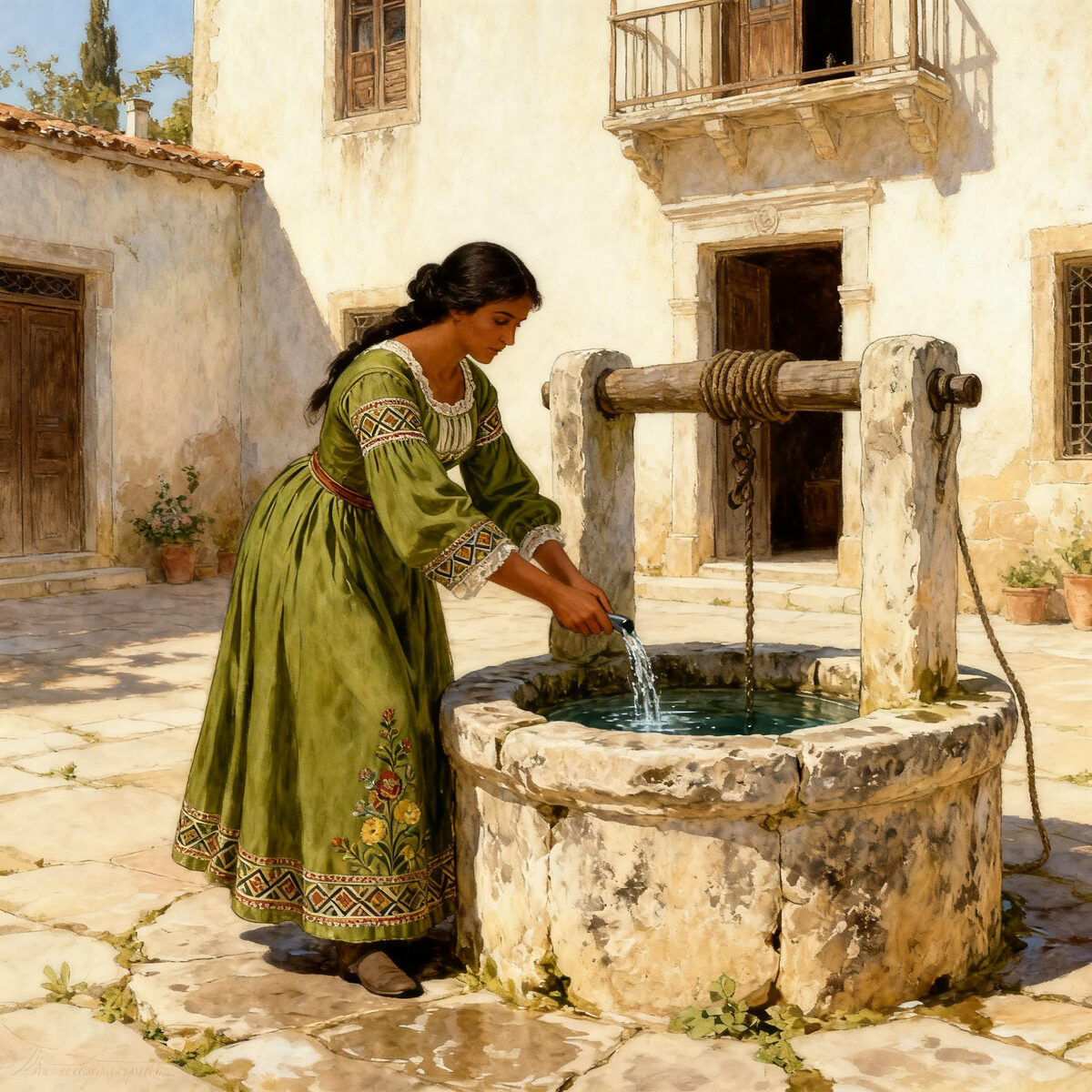
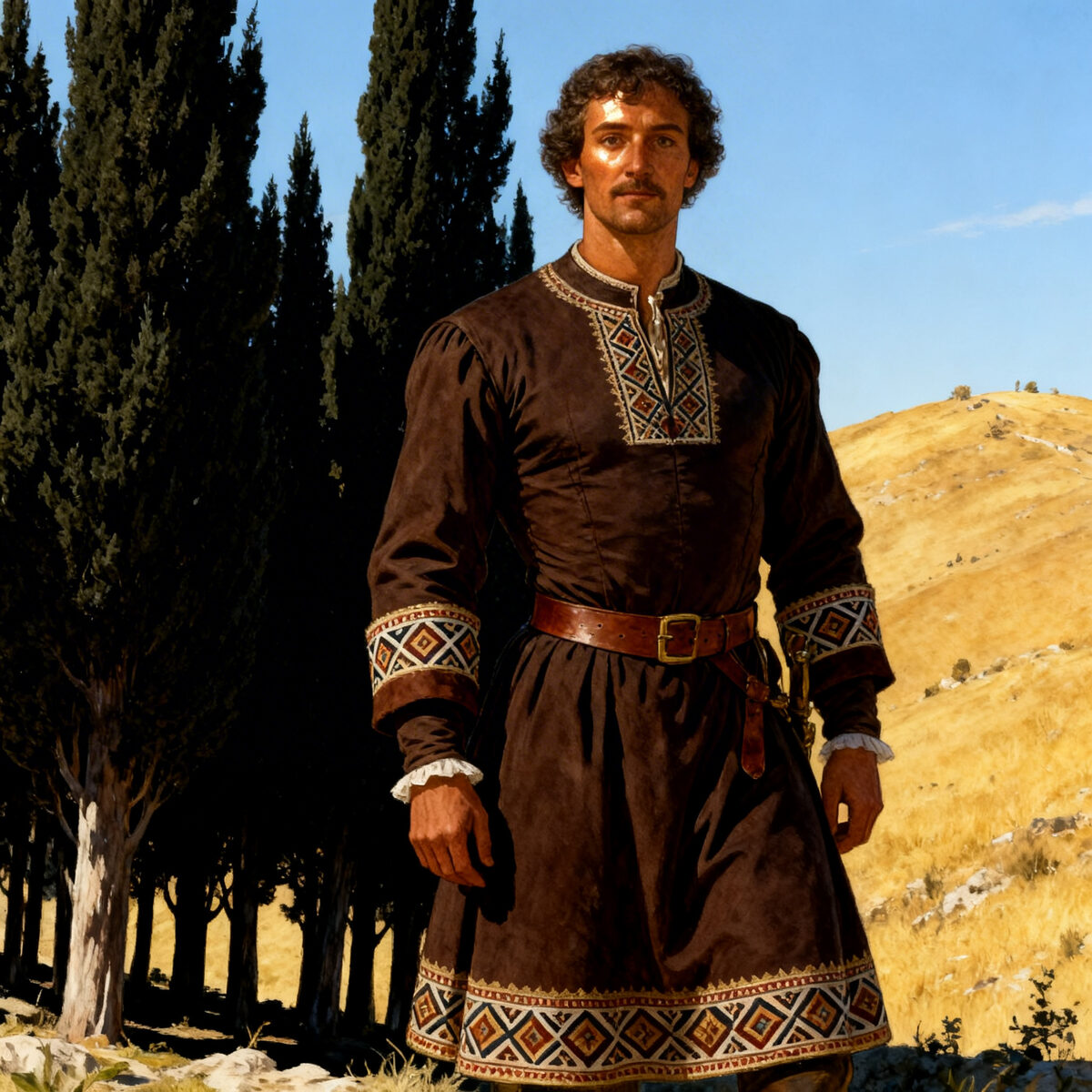
The houses are whitewashed stone with blue-painted shutters and doors, and a well sits in the middle of each old courtyard. Cypresses mark the edges of the cemeteries and the boundaries between properties. By late afternoon the water of the Aigaion turns the color of dark wine. The hills smell of thyme and oregano baking in the sun. The Achaeans are lean and tan, dressed in plain linen, with faces that brighten when an argument starts.
Olive harvest comes in late autumn and the village turns out for it; the children spread the nets, the older men shake the branches, the women sort the fruit. The wine they press in October is retsina, sealed with pine resin so the casks survive the summer crossing to Tsarigrad. Fishermen leave the harbor before dawn and bring back octopus, sardines, and red mullet to hang on the kitchen line. After the day’s work the kafeneio fills and the third glass of wine starts the argument about fishing rights or olive prices, and the lyra in the corner picks up where the argument ends. The Achaean clerks who balance Valdara’s books at the customs house descend from philosophers and use their grandfathers’ theorems to do the calculations.
When the cicadas go quiet at noon, the village goes inside. The shepherd’s son leads his goats the long way around the cypress grove between noon and the second hour after, and his grandmother told him why once when he was small. The fisherman who unties his boat in the morning says a word toward the headland before he pushes off; the words are old, taught to him by his grandfather before he could read. The roadside shrine at the crossroads outside the village holds a spoonful of olive oil in a clay cup, and the spoon is smooth from use. The Faith built its parish church next to the well in the courtyard. The priest blesses the well at the Covenant. The women of the village pour wine into the well’s edge at the new moon, and they do this work in the priest’s absence by mutual arrangement.
The amphitheater above the village still has its original acoustics. Through the harvest evenings, the villagers gather in the lower seats. A young woman sings the lead, and the curve of the stone carries her voice to the last empty seat in the last row. Her grandmother told her once that nobody would remember this song after another generation.
In Grimmloch the Ka Agorate’s Hippeus race chariots across the Mare Somniorum drawn by hippocampi and sea-serpents, and an Achaean who has crewed her family’s caïque around the home islands since she was eight handles a Hippeus chariot the way she handles her caïque, with the hippocampus replacing the sail. The Aelfyn Sith’s Wilderkin hold their revels in the groves and at the river bends, and an Achaean grandmother who has taught three grandsons the route around the cypress grove arrives at a Wilderkin revel and finds Pan and his dryads sitting at the fire. The Dunraven Folk’s Drekarmen sail the coasts trading and raiding from serpent-prowed longships, and an Achaean fisherman who has said the old words to the headland before every sailing finds those words already known on the Drekarmen ships.
Reference Images
These images represent the visual direction for this region and were generated with OpenArt.
Grimmloch is an alternate reality — not a retelling of history. I have spent decades studying the stories of our own world so that each region feels grounded in something real, even when the fiction diverges. The map is not the territory. If I have, at any point, failed to honor the spirit of these cultures, please email me directly. I welcome the opportunity to address it.